Introduction
Warehouses often store long materials like pipes, lumber, or panels. Traditional racks limit access and waste space. A Cantilever Rack solves this with open arms and rear columns. It supports oversized loads and improves forklift handling. Understanding Cantilever Rack basics helps businesses organize inventory and use vertical space more effectively. In this guide, you will learn its structure, key components, configurations, and practical warehouse storage strategies.
What Is a Cantilever Rack and How Does It Work?
The Core Design of a Cantilever Rack System
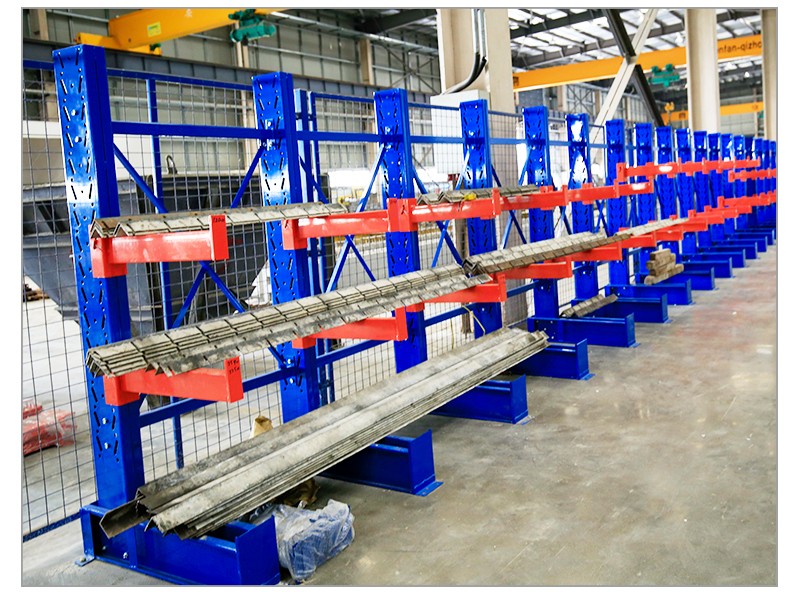
A Cantilever Rack uses a simple yet highly effective structural design. Vertical columns form the backbone of the system, while horizontal arms extend outward to support stored materials. Because the rack has no front columns, it provides an open storage face that allows items to be placed or removed without obstruction. This open layout improves handling efficiency and allows forklifts to access products directly. The design also allows adjustable arm heights, enabling warehouses to store products of different sizes without reconfiguring the entire storage system.
How Cantilever Rack Supports Long and Bulky Materials
Long items such as lumber, metal bars, pipes, and sheet goods require specialized storage solutions. A Cantilever Rack supports these materials by distributing weight across multiple arms positioned along a vertical column. Each arm acts like a shelf, allowing materials to rest horizontally without needing pallets or containers. This configuration keeps inventory organized while preventing materials from bending or sagging. Warehouses storing construction materials, industrial tubing, or furniture often rely on Cantilever Rack systems because they maintain product stability while allowing fast access during loading operations.
Why Cantilever Rack Is Different from Traditional Storage Systems
Traditional pallet racks rely on beams placed between vertical frames, which limits access for oversized items. A Cantilever Rack removes these front uprights, creating uninterrupted storage space along the entire rack row. This structural difference allows businesses to store products that extend beyond standard pallet dimensions. It also improves handling speed because forklifts can approach from multiple angles. As a result, warehouses managing long materials often choose Cantilever Rack systems to simplify operations and maintain efficient material flow throughout the facility.
Key Components of a Cantilever Rack System
Uprights and Bases: The Structural Backbone
The stability of a Cantilever Rack begins with its uprights and bases. Uprights are vertical steel columns that carry the weight of stored materials and the rack arms attached to them. Bases extend outward from the bottom of each column and anchor the system to the floor. Together, they create a stable foundation capable of supporting heavy loads. Properly designed bases balance the weight stored on the arms and prevent the rack from tipping during loading operations. Strong uprights ensure the rack maintains alignment even when handling large industrial materials.
Cantilever Rack Arms and Their Load-Bearing Function
The arms of a Cantilever Rack act as the main storage levels within the system. These horizontal supports extend from the uprights and hold the stored materials directly. Arm length and thickness determine how much weight each level can support. Shorter arms often carry heavier loads because they reduce leverage on the upright column. Many systems allow adjustable arm positions so warehouses can change storage levels as inventory needs evolve. This flexibility makes Cantilever Rack systems suitable for industries where product sizes frequently vary.
Bracing Systems That Stabilize the Cantilever Rack
A stable bracing system is essential for maintaining the structural rigidity of a Cantilever Rack. Different types of braces connect upright columns to form a unified frame structure while controlling column spacing and lateral movement. Properly designed bracing improves load distribution and ensures the rack remains stable during heavy-duty warehouse operations.
| Bracing Type | Structural Form | Typical Spacing / Dimension | Technical Function | Application Scenario | Installation Notes |
| X-Brace (Diagonal Cross Bracing) | Two diagonal steel braces forming an “X” | Upright spacing commonly 900–1500 mm | Provides diagonal rigidity and prevents rack sway | Standard cantilever rack rows in warehouses | Ensure both diagonal members are tightened evenly |
| Horizontal Brace | Straight steel bar between uprights | Installed every 600–1200 mm vertically | Maintains column alignment and spacing | Medium-duty racks storing lumber or pipes | Must remain level to avoid uneven load transfer |
| Channel Brace | Steel channel section connecting columns | Section thickness typically 3–6 mm | Increases resistance to bending and torsion | Heavy-duty industrial cantilever racks | Used when rack height exceeds about 6 m |
| Back Bracing Frame | Combined horizontal and diagonal frame | Frame width determined by load length | Forms rigid frame structure across rack row | Long material storage systems | Install symmetrically to maintain structural balance |
| Column Spacing Control | Distance between uprights | Typically 1–3 m depending on material length | Controls load deflection and support points | Storage of long beams, pipes, lumber | Spacing should align with arm support points |
| Material Specification | Structural steel braces | Yield strength commonly ≥250 MPa | Ensures braces withstand horizontal loads | Industrial and heavy-load environments | Verify compatibility with upright design |
| Fastening Method | Bolted structural connection | Bolt grades commonly 8.8 or higher | Allows easy maintenance and replacement | Modular cantilever rack systems | Torque bolts according to manufacturer specifications |
| Stability Performance | Rack lateral deflection control | Lateral deflection typically limited to < H/200 | Maintains structural safety under load | Tall cantilever racks above 6 m height | Regular inspection recommended |
Tip:When designing a Cantilever Rack bracing system, column spacing should match the length of stored materials. Combining X-braces with horizontal braces significantly improves structural stability and reduces lateral movement under load.
Types of Cantilever Rack Systems for Different Storage Needs
Structural Steel Cantilever Rack for Heavy-Duty Storage
Structural steel Cantilever Rack systems are designed for demanding industrial environments. They use thick steel components and welded structures to support heavy materials such as steel pipes, bar stock, and large construction components. Because of their high load capacity, these racks are commonly used in manufacturing plants, metal service centers, and building material warehouses. Structural designs also perform well in outdoor environments when combined with protective coatings or galvanized finishes. This durability allows businesses to store large quantities of heavy inventory without sacrificing accessibility.
Roll-Formed Cantilever Rack for Light and Medium Loads
Roll-formed Cantilever Rack systems provide a flexible solution for lighter storage requirements. They use thinner steel components formed through rolling processes, which makes them easier to install and adjust. Because arm levels can be repositioned quickly, this type of rack adapts well to changing inventory profiles. Many distribution centers and retail warehouses use roll-formed Cantilever Rack units to store items such as wooden boards, lightweight tubing, or packaged materials that require open-front access.
Single-Sided vs Double-Sided Cantilever Rack Layouts
A Cantilever Rack can be configured in single-sided or double-sided layouts depending on warehouse design. Single-sided racks store materials on one side of the column and are usually placed against walls. Double-sided racks allow storage on both sides and are often installed in the center of warehouse aisles. This configuration increases storage density while maintaining access from multiple directions. Selecting the right layout depends on available floor space, traffic flow, and the type of equipment used for material handling.
How to Choose the Right Cantilever Rack Configuration
Determining the Correct Cantilever Rack Load Capacity
Selecting the correct load capacity is essential when installing a Cantilever Rack system. Each rack arm and upright column is rated to support a specific weight. The total capacity depends on how many arms share the load and how evenly the weight is distributed. For example, if a material weighs 6000 pounds and three arms support it, each arm carries roughly one third of the load. Proper calculations ensure the rack performs safely while maintaining long-term structural integrity.
Selecting Proper Arm Length and Spacing
Arm length determines how deeply materials can rest on a Cantilever Rack. Longer arms allow deeper storage, while shorter arms support heavier loads. Spacing between arms must also match the length of stored materials to prevent sagging. Warehouses often test sample loads to determine the ideal spacing for their products. Correct spacing distributes weight evenly across the rack system and allows operators to remove items without disrupting adjacent inventory.
Planning Cantilever Rack Height and Warehouse Layout
The height of a Cantilever Rack must align with warehouse ceiling height and forklift reach capability. Taller racks allow companies to use vertical space more efficiently, increasing total storage capacity without expanding the facility. However, sufficient clearance must remain between levels for safe loading and unloading. Proper planning also considers aisle width so forklifts can maneuver long loads safely. A well-designed layout improves workflow and reduces handling time across the entire storage area.
Materials and Products Commonly Stored on Cantilever Rack
Cantilever Rack for Lumber and Construction Materials
In lumber yards, a Cantilever Rack helps maintain proper support for long wooden boards and structural timber. Arm spacing is typically arranged so the distance between supports is no greater than half the product length, which helps prevent bending or deflection. Bundled lumber can be stored on several rack levels, improving vertical storage density while keeping materials accessible for forklifts. Some facilities also add protective arm caps or wood decking to reduce surface damage to finished wood products during repeated loading and unloading operations.
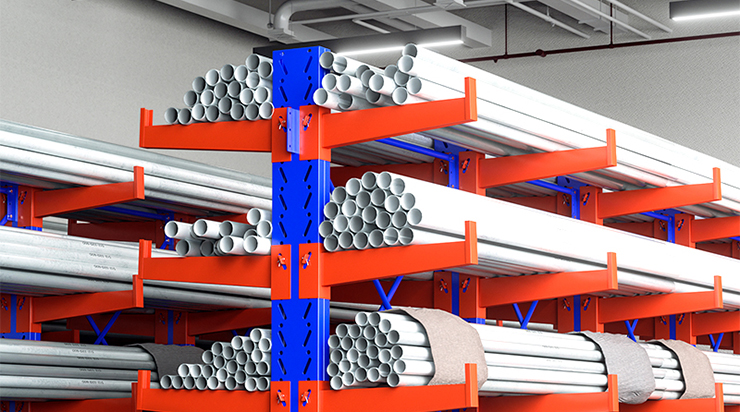
Using Cantilever Rack for Pipes, Tubes, and Metal Bars
For industrial pipe and bar stock storage, a Cantilever Rack often uses inclined arms with a slight upward pitch to prevent cylindrical materials from rolling. End stops or removable pipe retainers may also be installed for additional load control. Arm spacing should match the material length to ensure balanced support along the pipe bundle. Metal service centers frequently organize racks by diameter or alloy type, which improves picking accuracy and reduces handling time when preparing materials for manufacturing or shipping.
Cantilever Rack Storage for Furniture and Large Panels
Warehouses storing furniture frames, sheet metal, or drywall panels often rely on a Cantilever Rack because its wide arm spacing supports large flat products without vertical obstructions. For delicate panels, facilities may add steel or plywood decking across the arms to create a continuous shelf surface. This helps distribute weight evenly and prevents edge damage. Many distribution centers also dedicate specific rack sections for different panel sizes, improving order picking efficiency and maintaining organized inventory flow within the warehouse.
Advantages of Using Cantilever Rack in Warehouse Storage
Faster Access and Material Handling Efficiency
A Cantilever Rack improves handling efficiency by allowing forklifts or side-loader trucks to approach loads directly from the front without navigating around vertical frames. This reduces unnecessary maneuvering and shortens loading cycles. In facilities storing long products such as pipes or lumber, forklifts can lift entire bundles and place them onto the rack arms in one movement. Wide aisles designed for long loads also improve operator visibility and reduce congestion during peak warehouse activity, helping maintain smooth material flow throughout the storage area.
Better Space Utilization with Vertical Storage
Using a Cantilever Rack allows warehouses to convert unused vertical space into productive storage capacity. Rack heights commonly range from about 3 to 9 meters, enabling facilities to store long materials on several levels while keeping floor areas clear for equipment movement. Storing items above ground also protects materials from floor moisture and accidental damage. By organizing long products vertically instead of stacking them on the ground, warehouses maintain clearer aisles and improve inventory visibility for faster identification and retrieval.
Flexible and Expandable Cantilever Rack Systems
The modular structure of a Cantilever Rack allows facilities to adjust the system as inventory requirements evolve. Uprights, arms, and brace sets can be added to extend rack rows or increase storage levels without major structural changes. Adjustable arm positions also make it possible to accommodate different product lengths within the same rack section. This flexibility helps warehouses respond to seasonal inventory changes or new product lines while maintaining consistent storage organization and operational efficiency.
Best Practices for Installing and Using Cantilever Rack
Proper Installation and Rack Anchoring
Installing a Cantilever Rack requires precise floor preparation and structural alignment. The concrete floor should be level and typically at least 100 mm thick to support anchor loads. Base plates are fixed using expansion or chemical anchor bolts to secure each column and prevent movement during loading. During installation, technicians measure upright spacing according to the stored material length to avoid product deflection. Cross braces must be tightened evenly to maintain rack geometry. Proper alignment of columns and arms ensures forklifts can load materials smoothly while maintaining structural balance across the entire rack system.
Ensuring Even Load Distribution on Cantilever Rack Arms
Maintaining balanced loading on a Cantilever Rack improves both safety and storage efficiency. Long materials should rest on at least two or three arms so the weight is distributed along the rack row. Arm spacing should correspond to the product length to prevent sagging or bending. Heavier materials should be placed on lower levels to reduce the center of gravity of the rack structure. Operators should also align materials along the same edge of the arms to maintain consistent load positioning. This approach helps preserve rack stability and allows forklifts to retrieve items without disturbing adjacent loads.
Routine Inspection and Maintenance of Cantilever Rack Systems
Routine inspection ensures a Cantilever Rack continues operating safely and efficiently. Warehouse teams typically follow structured inspection schedules and technical standards to identify wear, misalignment, or loose structural components before they affect rack performance.
| Inspection Category | Inspection Item | Recommended Standard / Data | Application Scenario | Technical Notes |
| Inspection Frequency | Visual inspection | Daily or before each shift | High-traffic warehouses, heavy forklift use | Quick checks identify visible damage or misalignment |
| Inspection Frequency | Operational inspection | Weekly | Medium usage environments | Focus on arm alignment, load placement |
| Inspection Frequency | Detailed structural inspection | Monthly or quarterly | Industrial facilities with heavy loads | Includes bolt torque checks and structural alignment |
| Structural Integrity | Upright column alignment | Deviation ≤ 1/200 of column height | Rack heights typically 3–9 m | Misalignment indicates impact damage or uneven loading |
| Structural Integrity | Arm deformation | Deflection should remain within manufacturer rating | Arms typically rated 500–2000 kg per arm | Excess deflection may reduce load stability |
| Structural Integrity | Base plate anchoring | Minimum 2 anchor bolts per base | Concrete slab thickness ≥100 mm typical | Anchors prevent rack overturning |
| Fastener Inspection | Bolt torque check | Follow manufacturer torque values (commonly 80–150 Nm depending on bolt size) | Structural connections and braces | Loose bolts reduce rack stability |
| Structural Components | Cross-brace inspection | No visible bending or cracking | Structural bracing spans typically 1–1.5 m | Braces maintain frame rigidity |
| Load Safety | Load distribution check | Weight evenly distributed across arms | Long materials like pipes or lumber | Avoid single-arm overload |
| Load Safety | Overhang control | Load overhang ≤ 50% of arm spacing | Example: 2 m spacing → ≤1 m overhang | Prevents material sagging |
| Rack Cleanliness | Debris removal | Inspect weekly | Metal processing or lumber yards | Prevents corrosion and obstruction |
| Surface Condition | Coating inspection | Check powder coating or galvanizing annually | Indoor and outdoor racks | Surface protection prevents rust |
| Damage Monitoring | Impact damage check | Inspect immediately after forklift impact | High forklift activity zones | Replace damaged arms or braces promptly |
| Record Management | Inspection documentation | Maintain log for ≥12 months | Safety compliance programs | Helps track wear trends and repairs |
Tip:Establish a formal rack inspection checklist and assign trained personnel to perform inspections regularly. Consistent documentation helps detect early structural issues and ensures the Cantilever Rack system continues operating safely under heavy loads.
Conclusion
Understanding Cantilever Rack basics helps warehouses store long and bulky materials more efficiently. Its open-front design, adjustable arms, and modular structure improve access, organization, and vertical space utilization. A well-configured Cantilever Rack supports lumber, pipes, panels, and other oversized inventory while improving material handling efficiency. Shanghai Shibang Storage Rack Co., Ltd. providesdurable Cantilever Rack solutions with strong structural design, flexible configurations, and professional support, helping businesses build reliable and scalable warehouse storage systems.
【Contact Us for Customization】
FAQ
Q: What is a Cantilever Rack used for?
A: A Cantilever Rack stores long items like lumber, pipes, and panels.
Q: How does a Cantilever Rack support long materials?
A: A Cantilever Rack uses horizontal arms to distribute weight across supports.
Q: Why choose a Cantilever Rack over pallet racks?
A: A Cantilever Rack offers open access for oversized products.
Q: How much weight can a Cantilever Rack hold?
A: Capacity depends on arm length, column strength, and rack design.
Q: Where are Cantilever Rack systems commonly used?
A: Cantilever Rack systems are used in lumber yards and metal warehouses.


