Phone / Whatsapp:+8615618993196

Views: 0 Author: Site Editor Publish Time: 2026-11-02 Origin: Site


Disorganized small parts create massive operational drag in fulfillment centers. High-mix, low-volume SKUs lead to severe picking inefficiencies and unacceptable inventory shrinkage. Moving full pallets is straightforward. Managing thousands of loose, small parts introduces intense complexity. Using standard pallet racking for tiny components, fasteners, or micro-electronics wastes critical vertical space. It also exacerbates picking errors and slows down fulfillment times. Workers spend more time searching for items than actually picking them. Fixing this requires a strategic shift in facility design. Facilities must transition from generic racking to specialized warehouse shelving. This equipment is specifically engineered for high-density storage, precise slotting, and rapid accessibility. Selecting the right systems, configuring ergonomic pick faces, and implementing robust zoning strategies transforms chaotic parts storage into a streamlined operation.
Density vs. Accessibility: Effective small parts storage requires balancing maximum bin density with ergonomic pick faces to reduce picker travel time.
Modularity is Critical: Inventory profiles change; selecting adjustable systems like boltless shelving prevents future bottlenecks.
System Integration: Shelving is only half the solution; integrating standardized bins, dividers, floor markings, and barcode labeling is mandatory for high-accuracy fulfillment.
Capacity Alignment: Over-specifying heavy duty shelving wastes capital, while under-specifying creates severe safety liabilities and limits future scalability.
Expanding catalogs of small parts rapidly consume linear shelf space. Without proper segregation, mixing similar-looking components increases the risk of cross-contamination. Workers spend excessive time hunting for exact matches when parts are dumped into generic boxes. A single mispick can cost upwards of $50 to $100 when factoring in return shipping, customer service labor, and restocking. When small parts look identical—like M4 and M5 bolts—storing them in adjacent, poorly lit bins guarantees errors. Every new part number requires a dedicated, clearly labeled home. Failing to isolate SKUs leads to mispicks, customer returns, and inaccurate inventory counts.
Common small parts storage failures include:
Mixing multiple SKUs in a single un-divided bin, causing pickers to sort through parts manually.
Storing fast-moving small parts at floor level, forcing constant bending.
Using oversized bins for tiny components, wasting up to 80% of the shelf depth.
Failing to label both the bin and the shelf, leading to bins being returned to the wrong location.
Picking ergonomics directly impact labor efficiency. The golden zone of picking lies between the waist and shoulders. Poorly configured warehouse shelving units force workers to bend, reach, or climb step ladders. These awkward movements drastically reduce picks-per-hour. They also increase worker fatigue and the likelihood of workplace injuries. Designing pick faces that keep fast-moving items within this ergonomic strike zone is non-negotiable for high-volume operations.
Storing small parts on standard pallet racks is a common and costly pitfall. This practice results in honeycombing. Vast amounts of vertical space between shelves remain completely empty. You end up paying to heat, cool, and light empty air. Standard racks are built for bulk, not precision. Dropping small bins onto deep pallet racks makes accessing items at the back nearly impossible without removing the front bins first.
Selecting the correct hardware dictates the success of your storage strategy. Different materials and assembly methods serve entirely different operational needs.
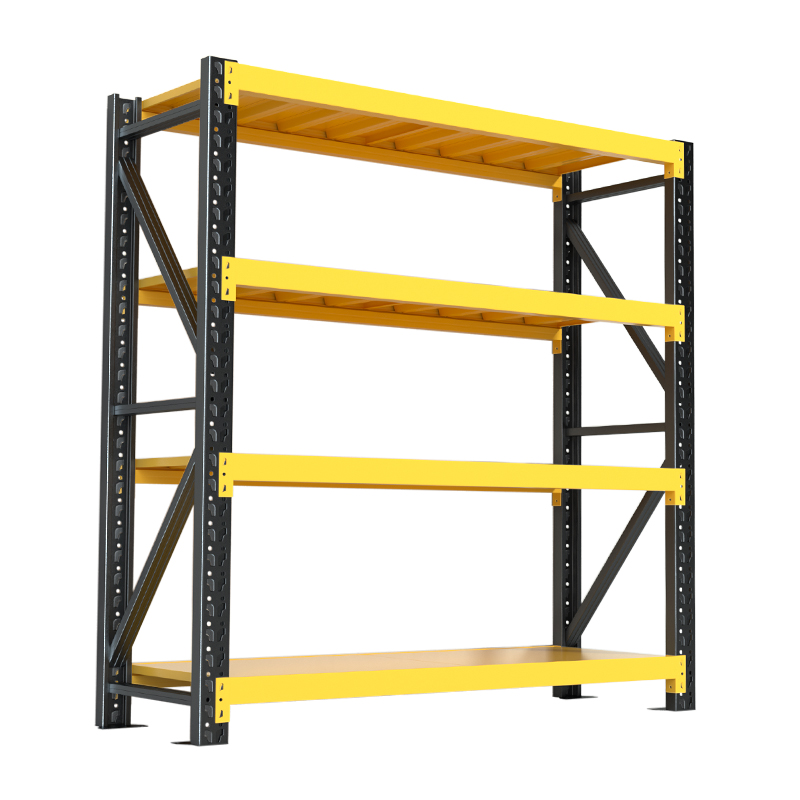
Teardrop or rivet designs allow rapid, tool-free assembly. You simply tap the horizontal beams into the vertical posts using a rubber mallet. They offer exceptional versatility for dynamic environments. boltless shelving adapts quickly when inventory profiles shift. You can adjust shelf levels in minutes without dismantling the entire bay. Limitations include lower weight capacities compared to structural steel. Decking materials directly impact long-term durability. Particleboard absorbs moisture and sags over time under point loads. Wire decking handles damp environments perfectly and allows dust to fall through.
Closed-back and open-back configurations use compression clips for shelf adjustment. These systems handle dense hardware, machined parts, and heavy automotive components. They are excellent for heavy duty shelving needs. The solid steel shelves prevent small parts from falling through to lower levels. They are slower to install than rivet systems and require a higher initial capital expenditure. Closed-back models prevent items from falling behind the unit but restrict visibility and airflow. Open-back models require sway braces to maintain structural rigidity.
Chrome or epoxy-coated wire configurations work exceptionally well in cleanrooms or cold storage. They provide high visibility, excellent airflow, and strict fire suppression compliance. Dust falls right through the wire gaps, keeping inventory clean. They are unsuitable for very small, loose parts unless you add solid bins. Wire shelves can also bow under concentrated heavy loads. They are best reserved for lightweight medical supplies, electronics, or food-grade components.
Integrating modular drawers within standard industrial storage racks maximizes cubic storage density. They are perfect for micro-parts, cutting tools, and high-security items. This method eliminates wasted vertical space entirely. Drawers can be subdivided into dozens of micro-compartments. The downside is a higher cost-per-square-foot. They also require strict organizational discipline to prevent drawers from becoming junk catch-alls.
| Shelving Type | Best Application | Assembly Speed | Weight Capacity |
|---|---|---|---|
| Boltless (Rivet) | Dynamic inventory, general parts | Very Fast | Medium |
| Steel Clip | Heavy hardware, machined parts | Moderate | High |
| Wire Shelving | Cleanrooms, cold storage | Fast | Low to Medium |
| High-Density Drawers | Micro-parts, high-security items | Slow (Pre-assembled) | High |
| Decking Material | Pros | Cons | Best Use Case |
|---|---|---|---|
| Particleboard | Low cost, smooth surface | Absorbs moisture, sags under point loads | Climate-controlled, light-duty storage |
| Wire Mesh | Fire code compliant, allows airflow | Small parts can fall through without bins | Damp environments, top-level storage |
| Solid Steel | Maximum durability, high capacity | Expensive, blocks light and water | Heavy hardware, oily or greasy parts |
Hardware alone does not solve inventory chaos. The physical layout and zoning logic dictate how efficiently workers navigate the aisles.
Implement ABC analysis to dictate part placement. "A" items represent the 20% of your SKUs that generate 80% of your picking volume. These belong in the golden zone near packing stations. This minimizes travel time for your most frequent picks. "B" items have moderate velocity and should occupy the shelves just above or below the golden zone. "C" items are the slow movers. They belong on the very top or bottom shelves. Group similar items to create designated zones for specific product categories. This streamlines kitting and multi-line orders. Workers should only bend or reach for items they pick infrequently. This routing logic drastically cuts down daily walking distances.
When mapping out your ABC zones, consider the physical flow of your warehouse. "A" items should not only be in the golden zone vertically, but they should also be located at the front of the aisles closest to the packing and shipping stations. This horizontal optimization is just as critical as vertical placement. If your fastest-moving parts are stored at the correct height but located at the very back of the facility, your pickers are still wasting hours walking empty aisles. Furthermore, regularly review your ABC classifications. A part that was an "A" item during the summer might become a "C" item in the winter. Your storage system must be flexible enough to accommodate these seasonal shifts without requiring a complete teardown.
Match bin dimensions exactly to shelf depth. Overhanging bins create aisle hazards and get clipped by passing carts. Short bins waste dead space behind them. Hopper-front bins allow pickers to grab parts without removing the bin from the shelf. Stacking bins work well for bulk storage but can become unstable if stacked too high on a single shelf. Nesting bins save space when empty. Use color-coded bins and sub-dividers to prevent mixed-SKU errors. For example, use blue bins for electrical components and red bins for mechanical fasteners. Sub-dividers allow you to store three different bolt sizes in one bin without them mixing. Always use clear plastic label holders to protect barcodes from peeling or smudging.
Beyond just sizing, consider the material of the bins. Corrugated cardboard bins are cheap upfront but degrade quickly in humid environments and generate dust, which can contaminate sensitive electronic components. High-density polyethylene (HDPE) plastic bins are the industry standard because they resist chemicals, oils, and moisture. They also withstand the daily abuse of being pulled and dropped. When using sub-dividers within these plastic bins, ensure they lock firmly into place. Flimsy dividers will bow or pop out when heavy metal parts shift, causing the very mixed-SKU nightmare they were meant to prevent. Additionally, implement a barcode system that utilizes 2D matrix codes on the bins. These codes are easier for handheld scanners to read from an angle compared to traditional 1D linear barcodes.
Implement heavy-duty floor tape and aisle signage. Clearly delineate picking zones, staging areas, and safe walkways around your industrial shelving units. Use yellow tape for pedestrian walkways and red tape for quarantine or staging zones. Hang large, highly visible aisle markers at the end of every row. Visual management removes the guesswork for new hires and temporary workers navigating the facility.
Effective visual management extends beyond just tape on the floor. Use color-coded aisle markers that correspond to specific product families. For example, the entire aisle housing pneumatic fittings could have blue signage, while electrical connectors use yellow. This color association helps pickers navigate the warehouse intuitively. Install end-cap mirrors on your shelving units to prevent collisions between workers pushing picking carts. Ensure that all lighting fixtures run parallel to the aisles, not perpendicular. Perpendicular lighting casts harsh shadows across the pick faces, making it incredibly difficult for workers to read bin labels or inspect small parts. If your current lighting is inadequate, consider installing LED strip lights directly under the shelf beams to illuminate the bins below.
Evaluate structural readiness for future mezzanine integration. If your facility has high ceilings, single-level shelving wastes massive potential. Multi-tier catwalk systems can double your usable footprint without expanding the building. Ensure the base units are engineered to support the weight of a second-level walkway. Planning for vertical expansion during the initial layout phase saves enormous retrofitting costs later.
Procuring storage equipment requires balancing immediate operational needs with long-term facility goals. Avoid purchasing based solely on upfront hardware costs.
Calculate the required capacity per shelf level carefully. Factor in point loads from heavy bins versus evenly distributed weight. A shelf rated for 500 lbs Uniformly Distributed Load (UDL) may buckle if a single 400 lb steel casting sits in the dead center. Dynamic loads occur when workers drop heavy bins onto the shelf or slide them across the decking. This friction and impact stress the beams differently than a static, resting load. Always over-engineer your capacity by at least 25% to account for dynamic impacts. Always check the manufacturer's deflection limits. Overloading shelves causes permanent structural bowing. This makes removing bins difficult and creates severe collapse hazards.
Assess the long-term labor costs of reconfiguring non-modular systems. Compare upfront savings of static units against the flexibility of adjustable warehouse storage solutions. Modular designs save massive labor hours during facility redesigns. If your SKU profile changes seasonally, you need shelves that adjust without tools. Welding or bolting shelves in place locks you into a rigid layout that will eventually bottleneck your operations.
Evaluate flue space requirements and seismic anchoring necessities. Longitudinal and transverse flue spaces must remain clear to allow heat to vent upward during a fire. Understand how solid decking versus wire decking impacts sprinkler system efficacy. Local fire marshals often require wire decking for specific storage heights to allow water penetration. Always anchor tall, narrow units to the concrete slab to prevent tipping during seismic events or accidental impacts.
Fire code compliance is a major hurdle during warehouse redesigns. The National Fire Protection Association (NFPA) has strict guidelines regarding high-piled combustible storage. If you are storing plastics or using plastic bins, the fire load of your facility increases dramatically. This often triggers requirements for in-rack sprinkler systems if your shelving exceeds certain heights. Always consult with your local Authority Having Jurisdiction (AHJ) before finalizing your layout. They will dictate the exact flue space requirements. Typically, a minimum of a 6-inch transverse flue space must be maintained between back-to-back shelving units. Installing physical flue space keep-out brackets ensures that workers cannot accidentally push bins too far back, which would block the critical ventilation paths needed for sprinklers to function correctly.
Executing a storage overhaul introduces operational risks. Poor planning can paralyze fulfillment and lead to massive inventory discrepancies.
Halting fulfillment operations during teardown and installation destroys productivity. Mitigate this risk through phased rollouts. Schedule off-hours installation during weekends or third shifts. Stage active inventory in temporary mobile racks to keep pickers working while the new aisles are built. Never tear down the old system entirely before the new one is ready to receive inventory.
Follow a strict phased rollout plan:
Audit current inventory and discard obsolete parts to reduce the volume being moved.
Erect the new shelving in an empty staging area or clear aisle.
Apply all location barcodes to the new empty shelves.
Transfer inventory zone by zone, updating the WMS simultaneously.
Dismantle the old racking only after the new zone is fully operational.
Upgrading hardware without upgrading location logic leads to lost inventory. Implement a rigid, scalable alphanumeric smart labeling system. Use a Zone-Aisle-Bay-Level-Position format before physical installation begins. Print and apply barcodes as the shelves are built. Moving parts into unlabeled shelves guarantees chaos. The physical move and the digital WMS update must happen simultaneously.
Purchasing massive steel racks for lightweight plastics wastes capital. Buying cheap rivet units for dense metal fasteners creates collapse hazards. Conduct a rigorous volumetric and weight audit of the current SKU profile before procurement. Weigh your heaviest bins and measure your largest components. Match the hardware specifications directly to this audit data. Do not guess weights based on visual inspections.
New systems rapidly degrade into disorganization without clear operational rules. Establish strict cleaning routines and return-to-stock protocols. When a picker finds a stray part, there must be a defined process for returning it to its exact location. Schedule annual warehouse audits to check for bent beams, missing safety clips, and damaged bins. Maintaining system integrity requires daily discipline from the floor staff.
Even the most perfectly engineered storage system will fail if the human element is ignored. Implement a clean-as-you-go policy. Pickers should be trained to remove empty cardboard boxes, broken dividers, and trash from the aisles immediately. Do not wait for a dedicated cleaning shift. Establish a dedicated quarantine zone for parts found on the floor. Never allow workers to guess where a dropped part belongs. It must be scanned and verified before being returned to stock. Schedule quarterly preventative maintenance checks on the shelving hardware. Look for sheared safety pins, missing compression clips, and beams that show signs of deflection. Catching a bent beam early prevents a catastrophic collapse that could injure a worker and destroy thousands of dollars in inventory.
Organizing small parts is not about buying generic racks. It is about engineering a high-density, highly accessible storage micro-environment. A well-designed system drastically cuts picker travel time, eliminates mixed-SKU errors, and reclaims wasted vertical space. Facilities that treat small parts storage as a strategic priority consistently outperform those that rely on disorganized, makeshift shelving.
Select equipment based on three primary metrics. Look at SKU volatility to determine the need for adjustability. Assess part weight for structural integrity. Evaluate picking velocity to ensure ergonomic access. Balancing these three factors guarantees a resilient and efficient storage infrastructure.
Conduct a physical space and SKU volumetric audit to capture exact weight and dimension data.
Categorize all small parts by ABC velocity and group them by product family.
Request CAD layouts and load-capacity certifications from equipment vendors.
Finalize a standardized bin size and barcode labeling strategy before beginning any physical installation.
A: Pallet racking is designed for heavy, bulk loads handled by forklifts. It features deep profiles and massive load capacities. Shelving is built for manual hand-picking. It has shallower depths, solid or wire decking, and lower weight limits suited for individual cartons or small parts bins.
A: Capacities vary wildly based on design and materials. Light-duty wire units typically hold around 250 lbs per shelf. Heavy-duty steel clip configurations can support 2,000 lbs or more per shelf level when the weight is evenly distributed across the surface.
A: Yes. The structural integrity of rivet systems makes them highly durable and versatile. The overall longevity heavily depends on the decking material. Wire or steel decking withstands harsh industrial use and heavy impacts far better than standard particleboard.
A: Start by calculating the total cubic volume of your current small parts inventory. Add a 20% growth factor for future expansion. Divide this combined number by the usable cubic volume available per shelving bay to determine the total units required.
A: Absolutely. You can retrofit standard racking systems with wire decking or solid drop-in panels. This creates a flat, stable surface perfectly suited to accommodate small parts bins, maximizing the utility of your existing heavy-duty infrastructure.
A: Modular bin configurations and high-density drawer systems are the most effective. Combining these physical storage methods with strict barcode location tracking ensures rapid picking, minimizes sorting errors, and maximizes cubic space utilization.


