Phone / Whatsapp:+8615618993196

Views: 0 Author: Site Editor Publish Time: 2026-09-18 Origin: Site


Long stock creates a different storage problem from a square pallet. A pipe bundle can extend across several support points and must be lifted without catching an upright. A pallet rack may work if the goods are safely contained on a suitable pallet or support frame, while open-front cantilever arms allow direct side access to loose or bundled lengths. The useful comparison begins with load geometry and handling equipment, not a blanket claim that one system is stronger.
Use cantilever arms for long, awkward goods that need an unobstructed loading face and several engineered support points.
Use pallet rack when a stable, appropriately contained unit load fits its beams, clearances and rated configuration.
Compare the loaded handling envelope, not merely the nominal length of the material.
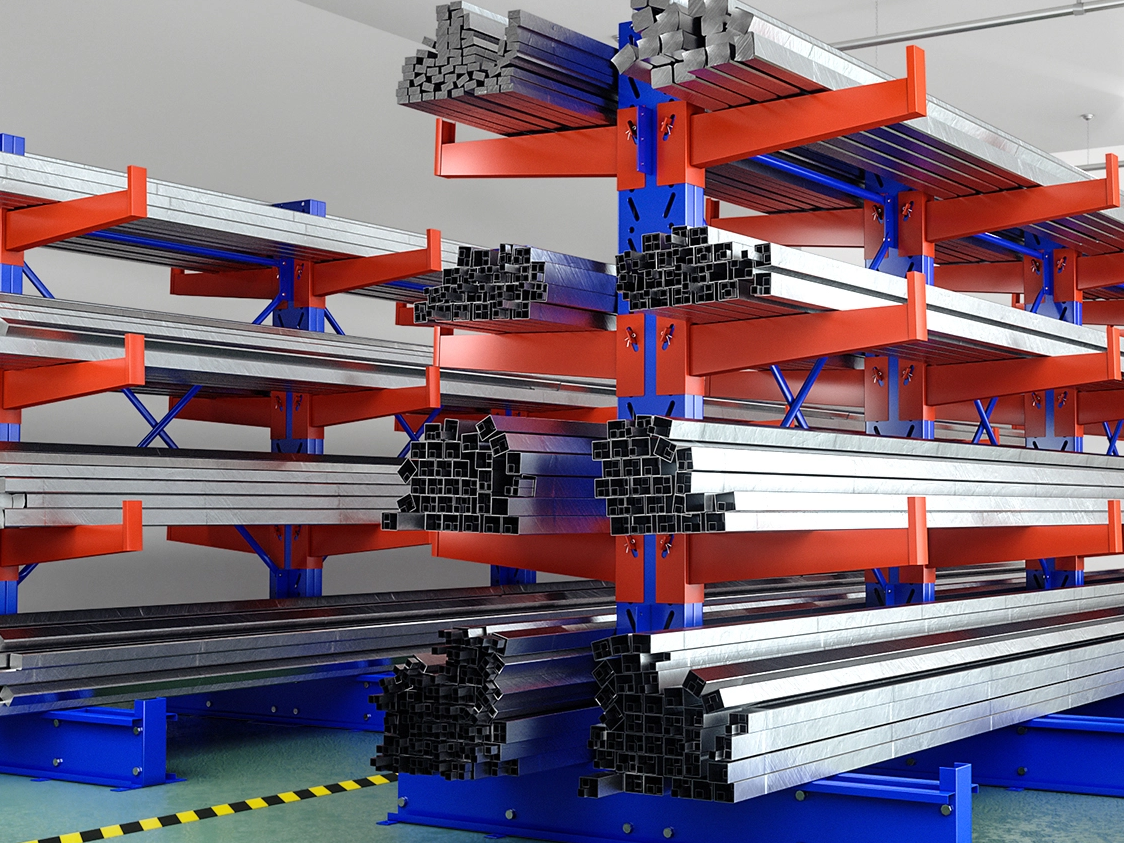
A Cantilever rack range presents horizontal arms from upright columns with no front post at each storage level. That geometry accommodates timber, pipes, profiles, rolls and other long items. The load must sit on enough arms, at suitable spacing, to control bending and prevent tipping or rolling. The arm projection, arm capacity, upright capacity and base or anchor design all interact; one published arm rating cannot be multiplied casually across a bundle.
Pallet racks support unit loads on beams between frames. A long item placed directly across standard beams can create unexpected point loads, overhang or instability. If a purpose-designed pallet, cradle or deck contains the stock and transfers loads as intended, pallet racking may be practical. Otherwise, the lack of a suitable support surface and obstruction from frames can make retrieval cumbersome.
For each material family, record maximum length, cross section, bundle weight, center of gravity, packaging, lifting points and tendency to roll or sag. Include the heaviest plausible bundle, not just an average. Decide how many arms support it and where the ends may overhang. In some cases separators, end stops or cradles are necessary to keep round stock from moving. Such accessories must be included in the engineered load assessment.
Shanghai Shibang Storage Rack Co., Ltd. lists an Adjustable cantilever rack for long and irregular goods, including single- and double-face arrangements. Select the face configuration from the building position and operating aisle plan: single face often fits a perimeter, while double face can serve two aisles from a central row. Neither choice overrides floor load, anchorage and truck-clearance checks.
The longest product must pass doors, corners, intersections and rack ends while under control of the chosen forklift, side loader or crane. A long load can sweep a much wider area than the truck itself. Confirm approach direction, fork spacing, lift height, ceiling services, adjacent pedestrian routes and the ability to place stock without dragging it over other bundles. Protect vulnerable rack areas and set clear handling procedures.
Storage density also depends on access. Very long material on a pallet may waste beam width or block adjacent positions; a cantilever row may require a wider handling aisle. Compare usable locations and retrieval steps under the same building constraints. Outdoor use introduces exposure and corrosion questions that need a specified finish and maintenance plan rather than an assumption about all steel racks.
If the stock remains loose or bundled and needs side loading along its length, begin with a cantilever concept.
If every load is safely palletized and the pallet transfers weight correctly, evaluate pallet rack dimensions and ratings.
For both, obtain site-specific drawings and rated capacities, then verify equipment travel and floor conditions.
“Long materials” is not a single load category. Straight steel profiles, timber packs, flexible pipe, sheet goods and rolls differ in rigidity, surface sensitivity and the way they are lifted. Record the longest and shortest unit, maximum bundle mass and the range of cross sections for each family. A bundle that is stable on a floor may spread or roll when placed on separate arms. The rack concept should reflect the actual packaging, banding and lifting attachment, rather than a generic material name. Where several product families share a row, check each against the same support and clearance plan.
Length alone does not tell you where to support the load. A stiff profile might span larger gaps than a flexible product of identical length, while a heavy concentrated component may impose a high force on one arm. The center of gravity can shift when the bundle is only partly picked. Specify the support points and any permitted overhang for each storage state, including partial bundles. The designer can then assess arm deflection, column loads and the load path into the base and floor. Operators need a visible rule so that the approved arrangement is actually used.
Pallet rack becomes more credible when the long material is converted into a stable unit load. A purpose-designed pallet or cradle may contain shorter bundles, distribute weight over the beams and provide predictable fork entry. Check the entire assembly, including pallet strength, restraint, overhang and compatibility with any decking. The load must not extend into a neighboring position or a travel path without specific allowance. A conventional pallet that happens to be underneath a long bundle is not proof that the combined unit can be stored safely on a rack.
The palletized approach has operating costs as well as structural requirements. Staff may need time to load, strap and later unpack each unit, and empty cradles require storage and return handling. Conversely, direct cantilever storage can expose the material to handling damage if bundles are dragged or lifted from unsuitable points. Compare total touches from receipt through dispatch, not just storage footprint. If goods arrive and leave on the same engineered carrier, pallet rack can be efficient; if operators repeatedly break bundles to pick lengths, open access may be more useful.
A long load turns differently from a standard pallet. The truck may need more room to align parallel with a cantilever row, and the far end of the stock can sweep through adjacent space. Show the turning path at the actual load length, fork position and lift height. Include intersections, end-of-row space, doors, columns, pedestrian routes and overhead services. If a side loader or crane is contemplated, verify its own approach and clearance needs. A storage bay is not useful if the load cannot be placed and removed without striking the structure.
The handling plan should address short pieces as well as maximum lengths. Short stock placed on widely spaced arms may lack support, while long stock may occupy several nominal bays. Consider dedicated zones or adjustable support positions if the assortment spans a wide range. Keep clear separation between lengths that are easy to confuse, particularly where workers pick a single item from a bundle. Labels and physical stops can help, but their exact form must suit the material and not interfere with lifting. Review how stock will be counted without moving an unsafe pile.
Cantilever columns transfer the weight of projecting arms and goods to a base and anchors. The floor therefore matters as much as the steel frame. Provide slab and joint information, check levelness, and identify any restrictions near pits or edges. Single- and double-face configurations create different load patterns and access requirements. The responsible designer should define permissible loading combinations, not merely a maximum arm weight. Installation and any changes in anchorage should follow the approved design and local requirements.
Long stock may contact rack arms during placement. Determine where impact protection is needed and whether it obstructs the load path. Inspect arms, connections, uprights and anchors for damage, movement or distortion under a documented site routine. A visibly bent arm should not be treated as merely cosmetic. Damaged components require assessment by a qualified party before continued loading. Provide enough aisle access to perform these inspections and to remove a damaged bundle without disturbing adjacent unstable loads.
A cantilever design may hold several lengths along one row, but each bundle needs an accessible face and appropriate support. Pallet rack may offer familiar locations but lose positions to overhang or special cradles. Count actual bundles or units that can be stored without blocking retrieval, then include aisle and staging area in the floor calculation. Model normal and peak stock, because a row that works for one material length may become congested after a product-mix change. The best-looking rack elevation is not necessarily the most usable building plan.
Ask for two engineered concepts when both methods appear plausible. Compare support arrangements, rated loads, material protection, equipment paths, installed costs and routine handling steps. Include the cost of cradles or restraints in the pallet option and the required aisle width in the cantilever option. A documented comparison helps avoid choosing solely on a single quoted rack price. It also reveals where a hybrid arrangement is sensible, such as cantilever for loose profiles and pallet rack for packaged components that already arrive as stable unit loads.
Surface condition can change the preferred solution. Finished profiles may be scratched by rough contact, while timber or pipe bundles can shed debris that affects handling. Identify whether contact pads, cradles, dividers or protective packaging are needed, and check that these additions still fit the support and clearance calculation. Avoid assuming that a rack accessory automatically protects the material under every loading method. Observe a representative placement and retrieval cycle with the proposed equipment before approving a full row.
Plan the unloading end of the process as carefully as storage. A load may be easy to put away while fully bundled but difficult to retrieve after several pieces have been removed. Define whether the remaining bundle is re-secured, transferred to a short-stock area or kept on the same support. Record the resulting lighter, narrower and potentially less stable condition in the load schedule. This is particularly relevant for customer orders that repeatedly break a pack. A rack should serve the actual dispatch unit, not only the incoming unit.
Cantilever is usually the more direct starting point for loose, bundled or irregular long materials because its face is open and support arms can be planned around the load. Pallet rack remains a candidate for stable, properly contained unit loads. The choice becomes defensible only after support spacing, deflection, handling clearance and floor conditions have been checked together. Shanghai Shibang Storage Rack Co., Ltd. manufactures cantilever products, with the final rack configuration requiring a project-specific load review.
It depends on length, stiffness, weight distribution and acceptable overhang; an engineered support plan should set both number and spacing.
Only if a designed support and restraint arrangement carries the load within the rack rating and prevents rolling, point loading and unsafe overhang.
No. Their benefit depends on accessible aisles on both sides, material lengths and the building layout.
Check the floor and anchorage, load stability, truck handling envelope, protection, inspection access and the complete route through the building.


