Phone / Whatsapp:+8615618993196

Views: 0 Author: Site Editor Publish Time: 2026-10-30 Origin: Site


Modern supply chains rarely operate on a single, uniform pallet size. Yet, many facilities still purchase storage equipment as if they do. Forcing mixed pallet sizes—such as standard 40" x 48" units, square 42" x 42" blocks, oversized 48" x 48" skids, or custom Euro pallets—into uniform configurations causes severe operational bottlenecks. You waste vertical and horizontal space. You increase the frequency of forklift damage. You compromise the structural integrity of the steel frames. To eliminate these inefficiencies, warehouse managers must employ a strict technical evaluation framework. You must align your building layout, inventory flow, and specific pallet racking dimensions before committing to a capital expenditure. Engineering a storage environment that handles variable load sizes safely requires precise calculations and a deep understanding of material handling mechanics.
System Flexibility vs. Density: Selective pallet racking offers the highest adaptability for mixed sizes, whereas high-density systems (Drive-In, Pallet Flow) require strict pallet uniformity and dictate specific workflows.
Dimensional Tolerances: Proper beam width, depth, and vertical clearances must account for the largest pallet dimensions, maximum load overhang, and the actual height of the products loaded on them, not just the facility average.
Facility Constraints: A successful pallet racking system must be engineered around the physical limitations of the building, including ceiling height, door positioning, and structural columns.
Safety and Compliance: Mixing pallet sizes without appropriate decking or cross-bars increases the risk of point-load failures and violates safety tolerances.
Vendor Accountability: Partnering with an RMI-certified pallet rack manufacturer ensures that custom or hybrid configurations meet strict seismic and structural engineering standards.
Inbound freight rarely matches the idealized models drawn on a warehouse blueprint. The Grocery Manufacturers Association (GMA) 40” x 48” pallet remains the dominant standard in North America. However, the reality on the receiving dock is much more complex. Facilities handling chemicals frequently receive 55-gallon drums strapped to 48” x 48” square pallets. The automotive industry relies heavily on 42” x 42” dimensions and custom steel skids. International shipping introduces various Euro pallets, such as the EPAL 1 (31.5” x 47.2”) and EPAL 2 (47.2” x 39.4”), which utilize block designs rather than traditional stringers. Treating these distinct footprints as interchangeable creates immediate, expensive problems on the warehouse floor.
When you place undersized pallets on oversized racks, you trigger a massive capacity drain. A few inches of dead space per pallet location might seem negligible. Multiplied across thousands of bays in a 100,000-square-foot facility, that dead space equates to a 10% to 15% loss in total cubic volume. You are paying to heat, cool, and light empty air. Conversely, forcing oversized pallets onto standard racks pushes the load into the longitudinal and transverse flue spaces. This directly violates National Fire Protection Association (NFPA) codes. Blocked flue spaces prevent heat from rising to activate ceiling sprinklers and stop water from penetrating down through the racks to suppress a fire.
Mismatched dimensions introduce severe structural risks. Pallet stringers must align correctly with the front and rear load beams to distribute weight evenly. When a 42-inch deep pallet sits on a standard 42-inch deep frame without proper wire decking, the stringers barely catch the edges of the beams. This poor load distribution causes immediate beam deflection. Industry standards dictate a maximum allowable deflection of the beam length divided by 180 (the L/180 rule). Uneven stress pushes beams past this limit, leading to permanent deformation and catastrophic point-load failures. You cannot rely on standard configurations when your inventory footprint constantly shifts.
For facilities managing high SKU counts, rapid inventory turnover, and highly variable pallet dimensions, selective pallet racking serves as the baseline standard. It provides complete, unobstructed access to every single pallet position. Forklift operators do not have to move other inventory to reach a specific load. This direct access drastically reduces handling time and minimizes the risk of product damage during retrieval.
This system excels in physical adaptability. You can easily adjust beam levels up or down on the teardrop or slotted uprights to accommodate varying product load heights. If a new supplier starts shipping taller loads, your maintenance team can reconfigure the bay in minutes without specialized tools. You can mix roll-formed steel components for lighter loads and structural steel components for heavy-duty applications within the same aisle. However, this flexibility comes with a distinct trade-off. Selective configurations yield the lowest storage density per square foot. You need significantly more aisle space to allow forklifts to maneuver, which eats into your total storage capacity.
High-density systems operate on strict dimensional tolerances. Drive-in rails and pallet flow rollers are engineered for specific pallet widths, depths, and bottom-board configurations. They are inherently hostile to mixed pallet sizes. If you introduce a 42-inch wide pallet into a drive-in lane built for 40-inch pallets, the load will fall through the support rails. If you put a block-style Euro pallet on a roller system designed for stringer pallets, the blocks will catch on the rollers and jam the lane.
Maximizing square footage requires a fundamentally different workflow. High-density setups store more pallets in less space but slow down retrieval times and limit selectivity. To balance density and flexibility, many warehouse managers implement a hybrid approach. They dedicate high-density industrial pallet racking blocks to uniform, high-volume SKUs that move in full pallet quantities. They then reserve selective racks for mixed, custom, or low-volume sizes.
Ignoring these implementation realities leads to severe equipment damage. Non-standard bottom boards catch on flow speed controllers, destroying the braking mechanisms. In drive-in systems, mismatched pallets force forklift operators to make dangerous steering adjustments inside the narrow lanes. This increases the likelihood of rack impacts, sheared anchor bolts, and collapsed uprights.
Push-back systems use nested steel carts on inclined rails. These carts can sometimes accommodate slight variations in pallet depth, but the width remains strictly constrained by the cart frame. If a pallet is too wide, it will rub against the adjacent lane, stopping the gravity-fed flow. Double-deep configurations store pallets two deep, requiring specialized reach trucks equipped with pantograph extenders to access the back position.
You must assess the cost-to-benefit ratio carefully. Gaining 25% to 30% more storage space sounds appealing during the planning phase. However, managing mixed sizes in a Last-In, First-Out (LIFO) system creates massive operational friction. If the front pallet is a different size or weight than the back pallet, operators struggle to align the forks safely. Debris from damaged, non-standard pallets frequently falls into the push-back rails, requiring constant maintenance to keep the carts rolling smoothly.
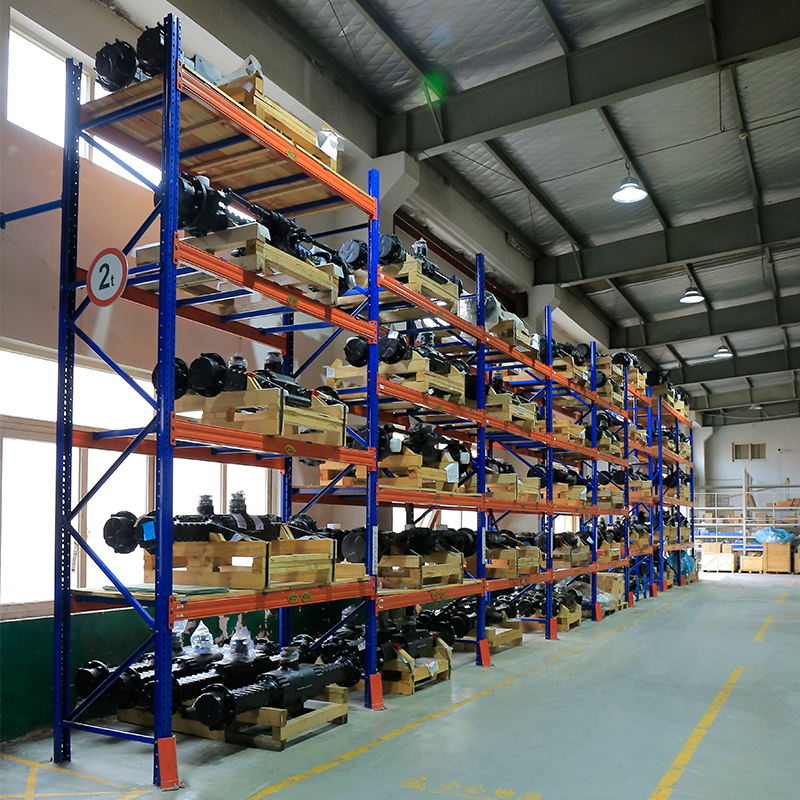
Before sizing the steel components, you must evaluate the physical limitations of the building. Measure the overall size, shape, and clear height of the warehouse. The clear height—the distance from the floor to the lowest hanging ceiling obstruction (like sprinklers or HVAC ducts)—dictates how many beam levels you can safely install. You must maintain a minimum of 18 to 36 inches of clearance below the sprinkler heads, depending on local fire codes and the type of suppression system installed.
Obstruction mapping is a mandatory first step. The positioning of dock doors, pedestrian walkways, and internal building columns dictates the orientation of your aisles. You must design the continuous run length of your pallet racking system around these fixed elements. Trying to force a layout that ignores building columns results in dead bays and wasted capacity. Furthermore, you must verify the concrete slab thickness and compressive strength. A standard 6-inch slab poured at 3,000 PSI can support typical selective racks, but high-density systems or heavy loads often require an 8-inch slab poured at 4,000 PSI to prevent the base plates from punching through the concrete.
Engineering standards dictate a minimum of 3 to 4 inches of lateral clearance between pallets, and between the pallets and the upright frames. This gap allows forklift operators to place and retrieve loads without snagging the adjacent inventory or striking the rack columns. Precision is non-negotiable here.
Consider a standard 96-inch beam. It easily fits two 40-inch wide pallets (40 + 40 = 80 inches), leaving 16 inches for the required side and center clearances. However, if you try to place two 48-inch wide pallets on that same beam (48 + 48 = 96 inches), you have zero clearance. The load simply will not fit safely. You would need a 108-inch beam to accommodate two 48-inch pallets with the proper safety gaps.
| Pallet Width (Qty 2) | Required Center Clearance | Required Side Clearance (x2) | Minimum Beam Length |
|---|---|---|---|
| 40 inches | 4 inches | 4 inches (8 total) | 92 inches (Standard 96" used) |
| 42 inches | 4 inches | 4 inches (8 total) | 96 inches |
| 48 inches | 4 inches | 4 inches (8 total) | 108 inches |
Depth calculations follow similar strict rules. The industry standard uses a 42-inch deep upright for a 48-inch deep pallet. This configuration allows a 3-inch overhang on the front and the back. The overhang ensures the pallet stringers rest securely on both load beams, transferring the weight directly into the steel. When pallet depths vary, you must install wire decking or specialized flanged pallet supports to prevent shorter pallets from falling through the gap between the beams.
Calculating beam spacing requires more than measuring the bare wooden pallet. You must factor in the tallest product load that will sit on that pallet. Once you have the maximum load height, add 4 to 6 inches of lift-off clearance. Forklift operators need this vertical space to lift the pallet off the beam before backing out of the rack. Without adequate lift-off clearance, operators will repeatedly strike the bottom of the beam above them, causing structural damage over time.
Fire code compliance relies heavily on vertical and horizontal gaps. You must maintain strict longitudinal and transverse flue spaces—typically 6 inches wide—throughout the entire rack structure. These flues act as chimneys. They allow heat to rise quickly to activate the Early Suppression Fast Response (ESFR) ceiling sprinklers, and they permit the water to penetrate down through the racks to extinguish the fire. Oversized pallets that hang too far off the back of the beams block these flue spaces, leading to immediate fire code violations and severe safety hazards.
Your racking layout must align perfectly with your existing material handling equipment. You calculate aisle width based on the forklift's Right Angle Stack (RAS) dimension, plus the length of the load, plus a minimum of 12 inches of clearance for maneuverability. Standard counterbalance forklifts require wide aisles, typically 12 to 14 feet, to turn and square up to the rack. Narrow aisle reach trucks can operate in 8 to 10-foot aisles, allowing you to compress the layout and add more rack rows.
When you squeeze aisle widths to maximize density, you drastically increase the risk of forklift impacts. Operators have less room for error when turning. To mitigate this risk, you must install heavy-duty steel column protectors anchored directly to the concrete floor. You should also specify reinforced uprights—such as double-column designs or heavy-gauge steel—at the end of every aisle where traffic is heaviest.
Standard load beams are designed to support uniformly distributed loads (UDL). When you place a standard, intact pallet on the beams, the weight spreads evenly across the steel. Odd-sized pallets, custom skids, or damaged bottom boards create non-uniform loads. These loads concentrate massive weight on small sections of the beam, drastically reducing its actual weight capacity.
Wire decking provides an excellent safety net for undersized or damaged pallets. Waterfall wire decking wraps over the edge of the beam, securing it in place, while flush decking sits inside the step of the beam. Both types prevent loose boxes from falling to the floor. However, standard wire decking is not engineered to bear heavy point loads. If you are storing heavy, non-standard pallets that do not reach both load beams, the wire mesh will crush under the weight.
For heavy, non-standard pallets, you must install structural steel pallet support cross-bars. Flanged cross-bars sit inside the beam step and provide rigid support directly beneath the load. Always recalculate your beam capacity when dealing with variable sizes. Non-uniform loads require derated capacity calculations. A beam rated for 5,000 pounds UDL might only safely hold 3,000 pounds if the weight is concentrated entirely in the center.
Selecting the right vendor requires looking past the initial quote. You must insist on partnering with an RMI-certified pallet rack manufacturer. The Rack Manufacturers Institute sets the baseline for structural safety in the United States. An RMI-certified manufacturer guarantees that their steel components, welding processes, and engineering calculations meet strict structural standards.
Site-specific seismic engineering is critical. A rack system designed for a warehouse in Texas will fail in California. The manufacturer must account for local seismic zones, soil classifications, and building codes when designing the upright frames and base plates. Evaluate the vendor's customization capabilities. Can they produce custom beam lengths or specialized upright depths without adding months to the lead time? Facilities handling mixed pallets often need non-standard components to make the layout work efficiently.
Finally, assess their lifecycle support. A trustworthy manufacturer provides comprehensive structural audits, readily available replacement parts, and clear, stamped engineering documentation detailing your exact load capacities. This documentation is required by OSHA and local inspectors to verify that your system is safe for operation.
There is no universal solution for warehouse storage. Accommodating mixed pallet sizes requires a deliberate trade-off between the complete flexibility of selective racking and the strict uniformity demanded by high-density systems. For most mid-to-large facilities, a hybrid approach works best. Segment your warehouse layout based on pallet uniformity and SKU velocity to maximize both space utilization and throughput speed.
Conduct a comprehensive pallet dimension audit, measuring the exact width, depth, product load height, and weight of all inbound freight variations currently in your facility.
Utilize a warehouse storage capacity calculator to model potential layouts, map out aisle widths, and identify operational bottlenecks before purchasing any steel components.
Install heavy-duty column protectors, structural cross-bars, and appropriate wire decking in bays designated for oversized or heavy non-standard loads.
Request site-specific seismic engineering documentation and stamped capacity plaques from your chosen manufacturer to guarantee local code compliance and operator safety.
A: The standard upright depth for a 40-inch by 48-inch pallet is 42 inches. This dimension allows the 48-inch deep pallet to overhang the front and rear load beams by exactly 3 inches. This overhang ensures the pallet stringers rest securely on the beams, providing maximum structural stability and allowing operators to visually confirm proper placement.
A: No, you should not mix pallet sizes in a drive-in system. Drive-in rails are engineered for a specific pallet width and bottom-board design. Introducing non-standard pallets causes the loads to slip off the rails, creating severe safety hazards, rack damage, and massive workflow disruptions inside the deep lanes.
A: Engineering standards require a minimum of 3 to 4 inches of lateral clearance between pallets, and between the pallets and the upright frames. This gap provides forklift operators with the necessary maneuvering space to safely lift, place, and retrieve loads without striking adjacent inventory or damaging the rack structure.
A: Wire decking is highly recommended when storing mixed pallet sizes, damaged pallets, or loose cartons. It acts as a safety net to prevent inventory from falling. However, standard wire decking cannot support heavy point loads. For heavy, non-standard pallets, you must use structural steel cross-bars to bear the weight safely.
A: To calculate the required beam length, add the widths of all pallets stored in the bay. Then, add 4 inches of clearance between each pallet, plus 3 inches of clearance between the pallets and the uprights on both ends. For example, two 48-inch wide pallets require a minimum beam length of 106 inches.
A: Excessive pallet overhang creates a severe structural imbalance, increasing the risk of the load tipping or falling. It also obstructs the longitudinal and transverse flue spaces. Blocking these flue spaces violates fire codes because it prevents ceiling sprinklers from effectively distributing water down through the rack structure during a fire.


