Phone / Whatsapp:+8615618993196
Views: 0 Author: Site Editor Publish Time: 2026-03-02 Origin: Site
Is your rack material strong enough? Material Selection for Different Rack Types affects safety and cost. Smart warehouse rack material selection improves long-term performance. In this article, you will learn about industrial rack material types and steel vs aluminum warehouse rack options. Quality solutions from Shibang support durable, high-performance storage systems.
Structural strength defines how a Warehouse Rack performs under static and dynamic forces. Pallet racking systems carry vertical loads, lateral sway forces, and forklift impact stress. If warehouse rack material selection underestimates compressive strength, uprights may buckle and beams may deflect. That leads to safety hazards and inventory damage. High-strength structural steel racks provide consistent load stability across multiple rack levels. In contrast, lower-grade materials may require thicker profiles to reach the same performance level, increasing weight and cost. Selecting appropriate heavy duty warehouse rack materials reduces deformation risk and ensures predictable load distribution. Manufacturers like Shibang Rack, which use high-density cold-rolled carbon steel and certified production standards, demonstrate how correct material choice directly improves structural reliability.
Durability affects maintenance frequency and replacement intervals. Corrosion resistant racks extend service life in humid or chemically exposed environments. Powder-coated carbon steel performs well in dry warehouses, but stainless steel offers superior protection in cold storage or food processing facilities. Although stainless steel increases initial cost, it lowers long-term repair expense and prevents rust-related weakening. When companies evaluate industrial rack material types, they must compare upfront investment with lifecycle value. Poor material selection may lead to coating failure, surface corrosion, and hidden structural fatigue. Over time, these issues reduce load capacity and increase inspection costs. High-quality anti-corrosion coatings, such as industrial powder coating processes used in advanced heavy duty storage solutions, significantly enhance long-term durability.
Material certification plays a critical role in regulatory compliance. A professional Warehouse Rack supplier should provide documentation verifying mechanical strength and material grade. Certified steel ensures that load ratings align with structural design calculations. Without certification, companies risk non-compliance during inspections or audits. Material traceability also supports insurance and safety verification. Choosing recognized industrial rack material types reduces liability exposure. Established global brands such as Shibang, which operate under CE and ISO quality systems, reflect the importance of certified materials in industrial racking projects.
Note: Always request mechanical strength documentation before approving rack production for high-load applications.
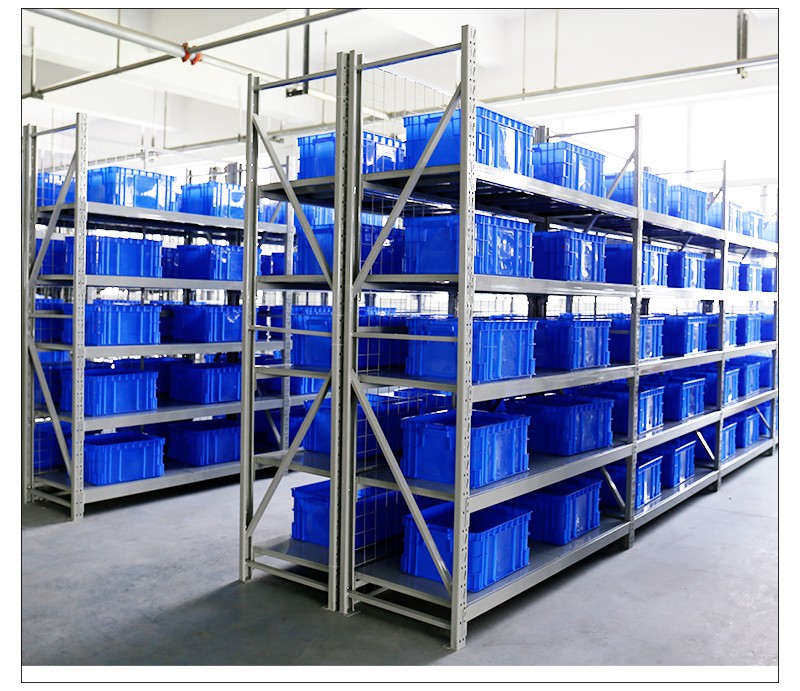
Carbon steel remains the most widely used option for warehouse rack material selection. It balances affordability and structural performance. Cold-rolled carbon steel offers reliable compressive strength and consistent beam rigidity. It performs effectively in selective pallet racking, double deep systems, and shelving structures. In controlled indoor environments, powder-coated carbon steel maintains surface integrity for years. However, it requires protective coating in humid areas. Carbon steel is often considered the best material for warehouse rack installations where heavy pallet loads and cost control are both priorities. Many medium duty shelving and multi-tier racking systems are built on this material foundation because it offers predictable engineering performance.
When evaluating heavy duty warehouse rack materials, mechanical resistance becomes central. C45 steel typically offers tensile strength around 550–600 N/mm². SAE1141 reaches approximately 800 N/mm². Higher mechanical resistance means improved compressive strength and reduced profile size. Using SAE1141 can allow smaller upright sections while maintaining the same load performance. That reduces overall steel volume and may lower structural weight. Although C45 has slightly lower cost per kilogram, SAE1141 often optimizes total industrial cost because it achieves equal performance using less material. Engineering-driven rack manufacturers increasingly adopt higher-strength steel grades to improve both efficiency and durability.
Steel Grade | Tensile Strength (N/mm²) | Profile Size Needed | Cost Efficiency | Typical Use |
C45 | 550–600 | Larger | Moderate | Standard racks |
SAE1141 | ~800 | Smaller | High | Heavy duty racks |
Stainless steel provides excellent corrosion resistance. It performs well in cold storage, pharmaceutical, and food processing facilities. Moisture and condensation accelerate corrosion in untreated steel. Stainless steel prevents structural weakening in such conditions. Although its initial price is higher, it reduces long-term maintenance and replacement costs. For companies operating in aggressive environments, stainless steel ensures consistent structural integrity and stable warehouse rack material selection results.
Aluminum is lighter than steel and naturally resistant to corrosion. However, its load-bearing capacity is lower than structural steel racks. It suits medium-duty shelving or modular systems where weight reduction and flexibility are priorities. Aluminum simplifies installation and reconfiguration. Yet for heavy pallet storage, it is not the preferred choice. Comparing steel vs aluminum warehouse rack systems often reveals that steel remains superior for high-load industrial use.
Material | Strength Level | Corrosion Resistance | Weight | Best Application |
Carbon Steel | High | Moderate | Heavy | Pallet racks |
Stainless Steel | High | Excellent | Heavy | Cold storage |
Aluminum | Medium | Good | Light | Shelving |
Selective pallet racking requires balanced strength and accessibility. Warehouse rack material selection for this type typically favors structural steel racks. These racks endure repetitive forklift access and uneven load distribution. Choosing high-strength carbon steel ensures beam stability and upright rigidity. Lower-grade materials may reduce initial cost but increase deflection risk under heavy pallets. Well-engineered pallet racking systems, such as heavy duty storage solutions offered by established brands like Shibang, highlight how material grade and coating quality directly impact long-term safety and load consistency.
Drive-in systems experience concentrated stress and higher collision risk. Heavy duty warehouse rack materials with strong compressive resistance are essential. Uprights must withstand vertical stacking pressure and lateral impact. SAE1141 steel can reduce profile size while maintaining performance. That improves material efficiency and reduces production weight. High-density systems benefit from precision manufacturing and modular assembly, allowing expansion without compromising structural stability.
Cantilever racks support long and bulky items such as pipes and timber. The arms experience bending forces. High-strength steel prevents deflection and uneven stress distribution. Warehouse rack material selection must consider arm span and load placement. Thicker arms increase cost, but insufficient strength leads to structural sagging. Specialized cantilever systems designed for industrial use demonstrate how reinforced steel construction supports heavy and irregular loads safely.
Material selection for Tire Racks requires reinforced arm design. Tires create lateral pressure and rolling force. Structural steel with protective coating ensures durability. Selecting the best material for warehouse rack systems in this category prevents connector fatigue and beam distortion. Reinforced steel improves resistance against side pressure and repetitive handling impact.
Light-duty shelving may use thinner-gauge steel or aluminum. These industrial rack material types support cartons and bins effectively. However, load calculation remains critical. Overloading light materials reduces safety margin. Selecting proper thickness ensures long-term performance. Modular medium duty shelving systems that allow vertical adjustment and expansion illustrate how material and design flexibility combine to deliver scalable storage performance.
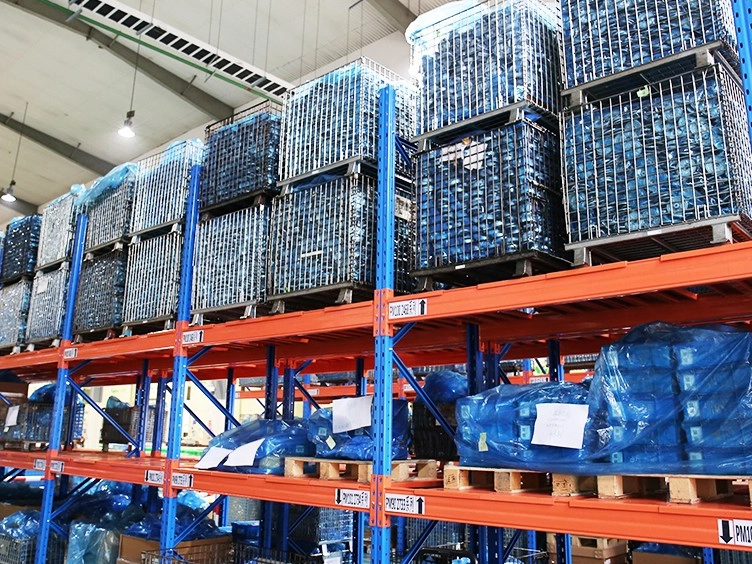
Steel vs aluminum warehouse rack decisions depend on load and environment. Steel provides superior tensile strength and compressive capacity. Aluminum reduces overall structure weight and simplifies installation. However, aluminum’s lower yield strength limits heavy pallet applications. Steel offers better cost-to-strength ratio for industrial settings.
Comparison Factor | Steel | Aluminum |
Load Capacity | Very High | Moderate |
Installation Ease | Moderate | Easy |
Long-Term Cost | Lower per load unit | Higher per load unit |
Heavy Duty Suitability | Excellent | Limited |
Tip: For heavy pallet storage above 1000 kg per level, prioritize structural steel racks over aluminum to maintain safety margins.
Humidity, temperature fluctuation, and chemical exposure directly affect rack lifespan. In cold storage, condensation accelerates corrosion. Stainless steel or galvanized coating protects structural components. Chemical environments may require composite or coated systems. Outdoor racks need anti-oxidation treatment. Ignoring environmental factors shortens service life and increases inspection frequency. Proper warehouse rack material selection must integrate climate and operational exposure. High-quality coating processes and certified manufacturing standards significantly enhance rack durability under demanding conditions.
Balancing performance and cost is essential. Selecting the highest-grade steel for every application is unnecessary. Instead, match industrial rack material types to actual load demand. Using SAE1141 in heavy-duty applications can reduce profile size and optimize material consumption. For light-duty shelving, thinner carbon steel reduces cost while maintaining safety. Working closely with a Warehouse Rack supplier ensures engineering-based recommendations rather than guesswork. Companies such as Shibang, known for engineering-driven heavy duty storage solutions and modular warehouse systems, illustrate how optimized material selection supports both budget control and long-term structural reliability.
When purchasing used racks, inspect structural integrity carefully. Check for corrosion, bending, and fatigue cracks. Mixing components from different steel grades may cause uneven stress distribution. Always verify mechanical resistance and coating condition. Used racks may offer cost savings, but hidden structural fatigue reduces long-term reliability. A thorough material inspection prevents unexpected performance decline and protects operational safety.
Note: Never combine mismatched industrial rack material types without confirming load compatibility through engineering review.
Material Selection for Different Rack Types defines strength and durability. Smart warehouse rack material selection matches load and environment. Structural steel suits heavy storage, while stainless steel and aluminum fit specific needs. Steel vs aluminum warehouse rack comparisons show steel’s strength advantage. High-grade materials improve efficiency, and Shibang delivers reliable rack solutions that support safe, scalable performance.
A: Warehouse rack material selection means choosing the best material for warehouse rack systems based on load, environment, and rack type.
A: Compare industrial rack material types like carbon steel, stainless steel, and aluminum to match load capacity and corrosion conditions.
A: Steel vs aluminum warehouse rack comparisons show steel offers higher strength for heavy duty warehouse rack materials.
A: Yes. Smart warehouse rack material selection reduces maintenance costs and improves long-term structural performance.


