Phone / Whatsapp:+8615618993196
Views: 0 Author: Site Editor Publish Time: 2026-03-02 Origin: Site
Is your Warehouse Rack truly safe? Many failures happen when warehouse rack load capacity is ignored. Choosing the right storage rack system affects cost and safety. This warehouse rack selection guide explains how to choose warehouse rack solutions for different loads. You will learn about heavy duty warehouse rack systems and Tire Racks. Quality products from Shibang can support long-term growth.
Warehouse rack load capacity includes more than pallet weight. Static load refers to the weight stored on beams. Live load includes movement during loading and unloading. Impact load comes from forklift contact or sudden placement. Many managers calculate only static weight and ignore dynamic stress. That oversight leads to beam fatigue and connector loosening over time.
When forklifts place pallets quickly, the actual force may exceed rated limits briefly. Repeated micro-impacts weaken the steel. This is why professional Warehouse Rack supplier specifications include safety factors. They anticipate operational realities, not just laboratory numbers. Understanding these load categories reduces structural failure risk and extends rack lifespan, especially in heavy duty warehouse rack systems designed for industrial environments.
Beam capacity defines how much weight each level can hold. Upright capacity defines how much weight the entire bay can support. Many facilities upgrade beams but ignore upright ratings. That imbalance creates structural weakness. If uprights cannot carry cumulative load, vertical collapse risk increases.
In a heavy duty warehouse rack system, both elements must be engineered together. Beam spacing also affects total capacity. Closer beam levels distribute load differently than wide spacing. Professional manufacturers such as Shibang (Nanjing Shibang Storage Equipment) typically calculate total bay load, beam deflection limits, and anchoring strength together to ensure compliance with CE and ISO quality standards.
Correct pallet overhang improves structural performance. Standard practice allows around three inches of overhang on each side. Without it, beam deflection increases. Too much overhang creates instability. Balanced positioning ensures the beams, not decking, carry the weight.
Uneven pallet loading also matters. If product weight shifts forward, it increases torsion stress. Over time, this weakens connectors and beam hooks. A precise warehouse rack load capacity evaluation must consider how goods are packed, not just their gross weight. In mixed-storage environments, especially where standard pallets and irregular items coexist, reinforced heavy duty shelving or cantilever systems may be required.
Most engineered systems include safety factors between 1.5 and 2.0 times expected load, depending on region and seismic conditions. These margins account for variability and future growth. Working with a qualified Warehouse Rack supplier ensures certified calculations and compliance documentation.
Note: Always verify local building and seismic codes before finalizing warehouse rack load capacity ratings.
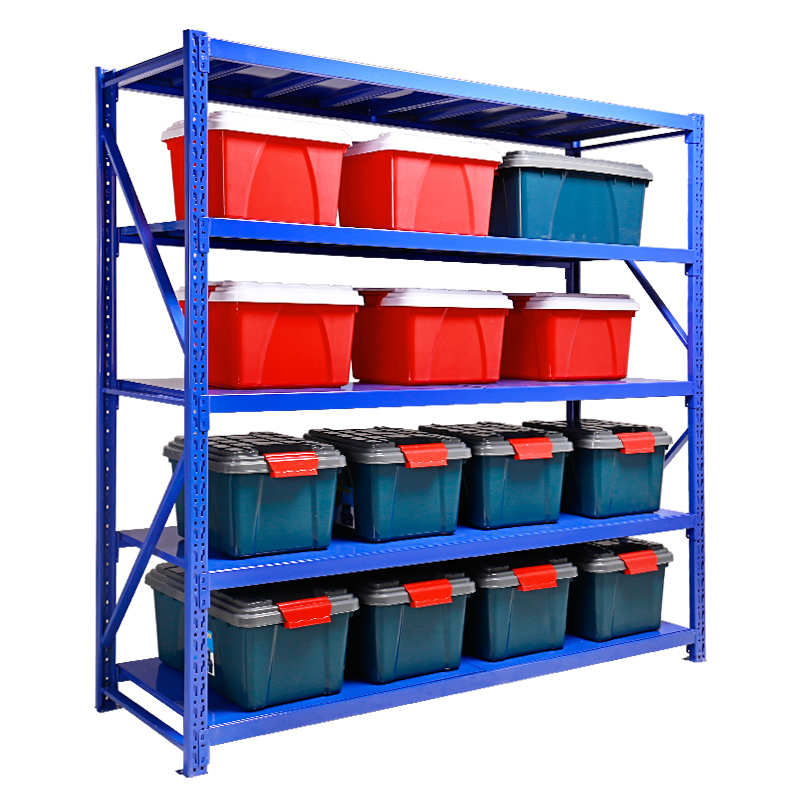
Light-duty loads include cartons and hand-picked items. These loads typically range below 800 pounds per level. For this scenario, lighter storage rack system designs reduce cost while maintaining flexibility. They allow frequent reconfiguration and support high SKU variety.
However, using light-duty racks for palletized goods creates safety risk. Many operations underestimate seasonal inventory spikes. When pallet weight increases unexpectedly, structural deformation may occur. Modular medium duty shelving systems, such as those commonly supplied in Shibang’s versatile warehouse storage solutions, allow horizontal and vertical expansion without replacing the entire structure.
Medium-duty loads typically range between 1,000 and 3,000 pounds per pallet. Selective Warehouse Rack systems perform well here. They balance access and density. They also simplify load calculation and forklift navigation.
This range is common in retail distribution and manufacturing. It allows cost-effective expansion while maintaining safe warehouse rack load capacity margins. Many businesses begin in this category before transitioning to heavier industrial loads. Choosing a system that supports 1,000–4,000 kg per level, as seen in many heavy duty shelving lines, ensures operational flexibility.
Industrial goods often exceed 3,000 pounds per pallet. In this case, heavy duty warehouse rack systems become necessary. They use thicker steel gauges and reinforced uprights. Baseplates are larger. Anchoring requirements are stricter.
Ignoring heavy-duty requirements increases collapse risk and insurance liability. Although upfront cost rises, long-term safety and compliance justify the investment. Heavy industrial sectors such as automotive or machinery rely on these reinforced systems. Many manufacturers with dedicated heavy duty storage solutions design their racks using high-density cold-rolled carbon steel and industrial anti-corrosion coating to maintain structural stability in high-load and high-frequency environments.
Drive-in and push-back racks increase density. They work best when pallet weight remains uniform. If weight varies widely, structural stress becomes uneven. This affects lane stability and long-term performance.
Below is a comparison of load suitability:
Rack Type | Typical Load Range | Density Level | Best For |
Selective | Medium | Low-Medium | Mixed SKUs |
Drive-In | Medium-Heavy | High | Uniform SKUs |
Push-Back | Medium-Heavy | Medium-High | Moderate SKU variety |
Pallet Flow | Medium | High | FIFO rotation |
Selecting the right system requires balancing access and structural strength. High-density systems reduce aisle space but increase engineering complexity. Selective racks offer full access but lower density. In facilities handling both pallet goods and long materials, cantilever racks or Multi-tier Racking systems may be integrated to maximize cubic space utilization.
Factor | Selective Rack | Drive-In Rack | Push-Back Rack | Pallet Flow |
Access | Full | Limited | Moderate | High |
Load Stability | High | High (uniform loads) | Medium-High | High |
Cost Level | Low | Medium | Medium-High | High |
Load Uniformity Required | Low | High | Medium | Medium |
Each configuration affects forklift movement and beam stress differently. The correct choice depends on throughput goals and warehouse rack load capacity planning. Advanced layout planning, often supported by CAD or 3D simulation tools, improves decision accuracy before installation.
Vertical space maximization improves storage efficiency. However, forklift lift height must match rack elevation. If equipment reaches only ten feet, installing sixteen-foot uprights wastes investment. Ceiling clearance and sprinkler distance must also meet fire code requirements.
Aisle width impacts density and equipment type. Narrow aisles increase pallet positions but require specialized forklifts. Very narrow aisle layouts may require capital investment in new equipment. Every decision influences overall storage rack system ROI and long-term scalability. Engineering-driven manufacturers often evaluate floor load capacity, slab thickness, and anchor strength during planning to prevent long-term structural issues.
Tip: Evaluate forklift lift height and load center limits before increasing rack height to avoid hidden equipment upgrade costs.
A reliable Warehouse Rack supplier provides structural drawings and certified calculations. They also evaluate floor slab thickness and anchoring requirements. These factors directly affect rack stability.
Supplier expertise reduces costly redesign. They analyze warehouse rack load capacity across multiple bays, not just isolated sections. They also provide maintenance guidance. Periodic inspections detect beam deflection and upright misalignment early. Global suppliers with CE and ISO9001 certification often offer long-term structural warranties and installation guidance to ensure compliance and operational continuity.
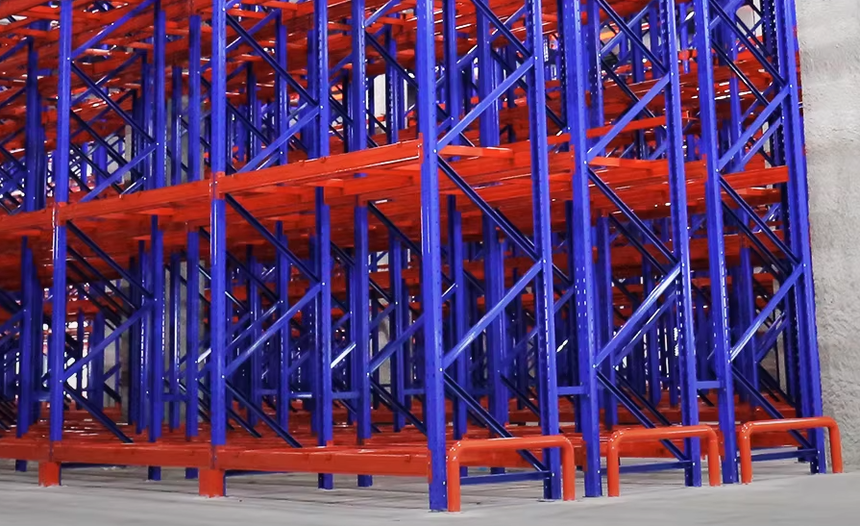
Higher capacity requires thicker steel and stronger bracing. This increases material cost. However, under-specifying capacity leads to repairs and downtime.
Load Category | Steel Gauge | Relative Cost | Risk if Undersized |
Light | Thin | Low | Beam bending |
Medium | Standard | Moderate | Upright fatigue |
Heavy | Thick | High | Structural collapse |
Balancing upfront investment against long-term safety is essential. High-density systems also raise installation cost but reduce building footprint cost per pallet. For B2B buyers in logistics, manufacturing, and 3PL sectors, investing in certified heavy duty warehouse rack systems often results in lower total lifecycle cost.
Tire Racks handle loads differently than pallet racks. Tires distribute weight unevenly. Their circular shape changes stacking behavior. Arms must resist rolling force and side pressure.
Vertical Tire Racks increase density but require reinforced arms. Horizontal storage reduces stress but consumes space. Combining Tire Racks with palletized heavy duty warehouse rack systems requires zoning strategy. Keeping tire zones separate reduces impact risk from forklifts handling heavier goods. In mixed-storage scenarios, modular rack systems designed for both pallet and irregular item storage help solve complex layout challenges efficiently.
Many companies underestimate pallet weight variation. Seasonal product changes increase load unexpectedly. Without margin, beam deflection increases. Another mistake is ignoring future growth. Choosing a minimal warehouse rack load capacity may require full replacement later.
Some managers choose based on price alone. Lower-cost systems often lack reinforcement needed for heavy loads. Short-term savings create long-term liability. Selecting certified, engineering-driven rack systems reduces these risks and ensures operational continuity across expanding warehouses.
Note: Never base warehouse rack selection solely on initial price. Evaluate structural certification and engineering support.
A reliable warehouse rack selection guide begins with accurate load calculation. Warehouse rack load capacity determines safety and efficiency. Businesses must evaluate pallet weight, density goals, and equipment limits. Heavy duty warehouse rack systems protect valuable goods, while selective racks and Tire Racks serve diverse needs. Shibang provides durable, modular storage solutions that deliver scalable performance and long-term value.
A: Warehouse rack load capacity defines how much weight a Warehouse Rack can safely hold. Ignoring it risks beam failure and poor heavy duty warehouse rack system performance.
A: In any warehouse rack selection guide, evaluate pallet weight, density goals, and forklift limits before selecting a storage rack system.
A: A heavy duty warehouse rack system supports higher warehouse rack load capacity and protects inventory in industrial applications.
A: Yes. Tire Racks require reinforced arms and specific load planning compared to standard Warehouse Rack configurations.


