Phone / Whatsapp:+8615618993196
Views: 0 Author: Site Editor Publish Time: 2025-11-30 Origin: Site
Pallet racking systems are a cornerstone of modern warehouse management and logistics operations. Whether you're storing high-volume products or rare, bulky items, choosing the right pallet racking system can make a significant difference in warehouse efficiency, space optimization, and operational cost. In this article, we will explore the various types of pallet racking, the advantages each system offers, and provide guidance on selecting the right system for your specific needs.
Pallet racking is a structured system used to store goods on pallets in a warehouse or distribution center. It consists of frames and beams that support pallets and allow for organized, efficient storage. Pallet racking systems are designed to maximize vertical space in warehouses, ensuring that goods are stored securely and that inventory is easy to access.
In today’s fast-paced logistics environment, efficient inventory management and space utilization are critical. Pallet racking systems help businesses achieve these goals by enabling easy access to stored goods, improving stock rotation, and increasing storage density. A well-designed racking system enhances workflow, reduces handling time, and lowers the risk of inventory errors. Moreover, a robust racking system ensures workplace safety by keeping the warehouse organized and minimizing clutter.
There are several types of pallet racking systems, each offering unique benefits and best suited for specific storage needs. Here, we will provide a detailed look at the most commonly used systems, highlighting their features, advantages, and ideal applications.
Selective pallet racking is the most common type of racking system used in warehouses. It is a simple, straightforward system where each pallet is directly accessible. The racking is designed with upright frames and horizontal beams that hold the pallets. This system is compatible with all standard forklifts and allows pallets to be stored one by one, making it highly versatile.
· High Accessibility: Each pallet can be accessed individually without needing to move other pallets. This is ideal for businesses that require frequent stock retrieval.
· Flexibility: It is a versatile system suitable for a wide range of products and industries, from food storage to electronics.
· Space Efficiency: Selective racking utilizes vertical space well, but it does not offer the highest storage density compared to other systems.
· Ideal for Low Turnover Items: It works best when products are frequently accessed or when inventory turnover is low.
Drive-In and Drive-Through racking systems allow forklifts to drive into the racking structure to place or retrieve pallets. In a drive-in system, the forklift enters from one side, whereas in a drive-through system, forklifts can enter and exit from both ends, providing more flexibility.
· High Storage Density: Drive-In racking is ideal for storing large volumes of similar products, particularly for businesses with low turnover items.
· Space Utilization: This system allows for deep storage, utilizing warehouse depth efficiently, especially when limited space is available.
· Suitable for Bulk Storage: Often used for food storage, beverage warehouses, or large-volume industrial storage, where products are stored in high quantities and rarely accessed.
Push-back racking uses inclined rails and carts that move pallets back when new pallets are loaded. Each level of the system allows pallets to be pushed further back as new ones are added. This creates a First-In, Last-Out (FILO) inventory system, ideal for specific industries that do not need to follow a strict First-In, First-Out (FIFO) rule.
· High-Density Storage: Push-back racking offers greater storage density compared to selective racking by utilizing both horizontal and vertical space.
· Cost-Efficiency: Although it’s more expensive than selective racking, it offers better space utilization, especially for medium-density storage needs.
· Ideal for Low-Turnover Items: Products that are not frequently accessed or rotated are perfect for push-back racking systems.
· Used in Manufacturing and Distribution Centers: Commonly found in industries like automotive and building materials, where inventory moves in batches.
Cantilever racking is designed for storing long, bulky, or irregularly shaped items such as pipes, wood, or furniture. The system has horizontal arms that extend from a vertical frame, allowing items to rest on the arms without the need for shelves or beams.
· Great for Irregular Items: Cantilever racking is specifically designed for bulky, long, or odd-shaped items that don’t fit neatly on traditional shelves.
· Easy Access: The open design makes it easy to retrieve long materials without obstruction.
· Industries: Commonly used in industries like construction, furniture, and steel production, where long and heavy items need to be stored.
Double deep pallet racking is a variation of selective racking where pallets are stored two deep in each row. This system increases the storage density by reducing the number of aisles needed but requires specialized equipment for accessing pallets in the back rows.
· Higher Density: Double deep racking allows for more pallets to be stored in the same area as selective racking, increasing overall storage capacity.
· Specialized Equipment: Accessing the back rows requires a reach forklift or other specialized equipment to move pallets in and out.
· Ideal for Medium Turnover: Best suited for operations with medium to low turnover products, such as retail distribution centers.
Mobile pallet racking is a dynamic racking system mounted on wheels or tracks, allowing entire rows of racking to be moved. This system reduces the need for aisles, which increases storage density by utilizing every square inch of the warehouse.
· Space Efficiency: By eliminating the need for multiple aisles, mobile racking maximizes available space and increases storage density.
· Flexibility: The aisles can be moved to accommodate different storage needs, allowing warehouses to adapt to changing inventory and requirements.
· Ideal for High-Density Storage: Often used in warehouses with limited space where maximizing capacity is crucial.
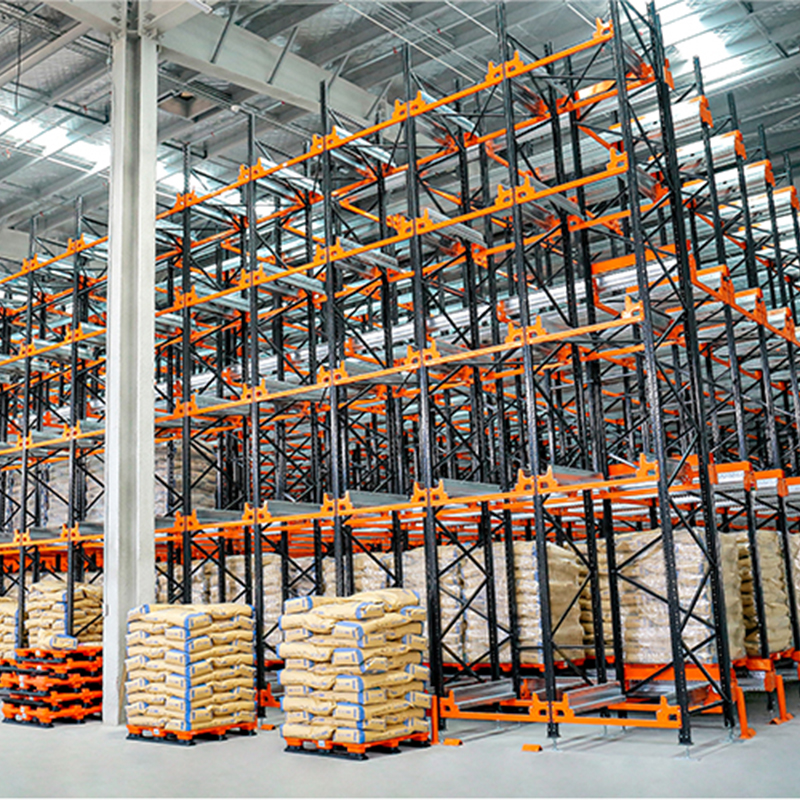
Shuttle racking systems utilize a motorized shuttle that moves along tracks within the racking system. The shuttle transports pallets to the retrieval point, improving the efficiency of order picking.
· Very High Density: Shuttle systems allow for extremely high-density storage while maintaining efficient access to inventory.
· Speed and Efficiency: The shuttle system improves order picking times by automating the transport of goods.
· Great for Large Warehouses: Commonly used in distribution centers and cold storage facilities, where product turnover can vary, but speed is important.
Choosing the right pallet racking system for your warehouse depends on several factors:
· Space Availability: Determine whether you need to maximize horizontal or vertical space, and consider the layout of your warehouse.
· Product Type and Size: Choose a system based on the size and nature of your goods (e.g., bulky, irregular, perishable).
· Inventory Turnover: Systems like selective racking are best for high-turnover items, while drive-in racking suits bulk storage for low-turnover products.
· Forklift Equipment: Ensure that the system is compatible with the forklifts and equipment you have available in your warehouse.
· Space Optimization: Pallet racking maximizes storage by using vertical space effectively, freeing up floor space for other uses.
· Improved Accessibility and Inventory Control: With the right racking system, inventory is easier to locate, reducing errors and improving order fulfillment efficiency.
· Safety and Durability: Pallet racking systems are built to withstand heavy loads, improving warehouse safety by keeping products organized and securely stored.
· Cost Efficiency: While the upfront investment can be significant, pallet racking systems help to streamline warehouse operations, reducing overall costs.
· Plan the layout of the racking system carefully to ensure optimal use of space.
· Ensure that the racking is installed by professionals to avoid safety issues and ensure compliance with local regulations.
· Test the system with sample loads before full operation to verify its functionality.
· Regularly inspect the racking system for signs of damage or wear, especially after heavy forklift activity.
· Ensure that pallets are correctly positioned to prevent strain on the racking system.
· Conduct routine checks of the overall warehouse safety, including the racking’s structural integrity.
Type of Pallet Racking | Storage Density | Accessibility | Best Use Case | Special Equipment Required |
Selective Racking | Low | High | General Use | None |
Drive-In Racking | High | Low | Bulk Storage | Specialized Forklifts |
Push-Back Racking | Medium | Medium | Low-Turnover | None |
Cantilever Racking | Low | High | Long Materials | None |
Mobile Racking | Very High | Low | High-Density | Specialized Forklifts |
Shuttle Racking | Very High | Medium | High Turnover | Specialized Equipment (Shuttle) |
In conclusion, selecting the right type of pallet racking system is crucial for optimizing warehouse space, improving efficiency, and maintaining safety standards. The decision depends on several factors, including product type, turnover rate, available space, and equipment. Each racking system—whether it's selective, drive-in, push-back, or mobile—offers distinct advantages that cater to different operational needs.
Whether you're dealing with bulk items, long materials, or high-turnover products, Shanghai Shibang Storage Rack Co., Ltd. can help you design and implement a racking system that will improve your warehouse's performance, maximize your space, and streamline your operations. Their advanced pallet racking systems combine durability with flexibility, ensuring your business remains efficient and competitive.
Routine inspections are key. Look for any signs of damage or wear, especially around the uprights and beams. Make sure the racking system is regularly checked by a certified professional to ensure it’s structurally sound and compliant with safety standards.
Yes, pallet racking systems can be tailored to your specific storage requirements. Depending on your product size, turnover rate, and available space, you can adjust the system’s height, depth, and layout. Companies like Shanghai Shibang Storage Rack Co., Ltd. offer a wide variety of customized racking solutions designed to fit your operational needs.
The lifespan of a pallet racking system largely depends on the materials used, the weight it supports, and how well it is maintained. A well-maintained system can last anywhere from 10 to 20 years, and some systems may last even longer with proper care.
Drive-in racking systems are ideal for bulk storage, whereas selective racking offers high accessibility for frequently retrieved products. If your warehouse stores large quantities of similar products with low turnover, drive-in may be the best choice. If your business requires frequent access to various products, a selective system would be more suitable.


